Should I Hire a Professional Headshot Photographer or Just Take a Selfie?
TL;DR:
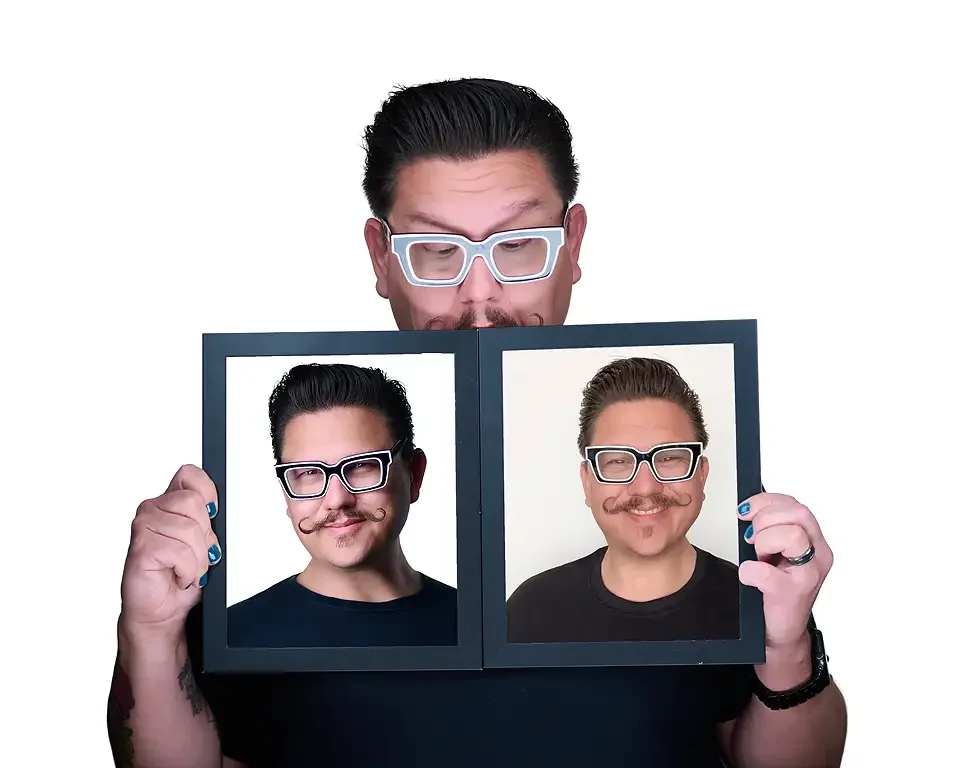
A selfie is better than a blank profile, but treat it as a temporary placeholder, not a strategy. Your headshot is a revenue-generating tool, not a vanity expense. The math on a professional session changes entirely once you understand what it's actually doing for your business. This post gives you the honest case for why it matters, what to look for in a photographer, and how to take a better selfie in the meantime if you're not ready to book yet.
Table of Contents
Why This Question Deserves a Real Answer
Sometimes The Problem Isn’t The Problem
Now Let's Change Your Attitude About the Money Problem
The Psychology Behind Why Your Headshot Matters More Than You Think
You Are the Product — Your Headshot Is the Packaging
Not All Photographers Are Created Equal
So Should You Take a Selfie?
How to Take a Better Selfie in the Meantime
Frequently Asked Questions
Why This Question Deserves a Real Answer
You're staring at a LinkedIn photo that's five years old, you know it needs to change, and you're trying to figure out if a professional photographer is actually worth the money or if your phone is good enough. That's a real question and it deserves a straight answer. I want to be upfront: I'm a Headshot Photographer and headshots are 80% of my business. So yes, I have skin in the game. But that's exactly why I'm going to give you the most honest answer I can instead of just telling you to book a session.
I used to shoot weddings, family sessions, maternity, and senior portraits, all of which I loved. But when I met my Mentor Peter Hurley and saw what a great headshot could do for someone's personal brand, their business, and honestly their own self-esteem so I went all in and niched down to only headshots.
Sometimes The Problem Isn’t The Problem
A really good Headshot Photographer costs real money. A full personal branding session can run anywhere from two to five thousand dollars. Even a focused individual session at a minimum runs a few hundred dollars for a single image.
Now layer that on top of what it actually costs to operate as a professional in fields like real estate, sales, or entrepreneurship. For example, Real Estate licenses and dues alone can run four thousand dollars or more. Every tool, platform, membership, and marketing expense comes out of your own pocket on the front end. The end-of-year tax write-off is great in theory but it doesn't help when you're watching your bank account shrink in real time when you’re trying to get up and running. (I totally empathize because I was there when I started my business).
Against that backdrop, taking a selfie, cropping into a photo from a party, finding a budget photographer, or tacking on a quick headshot during a family session because hey you're already dressed nicely feels like the perfect logical solution. And honestly, they're not irrational.
As the Great Captain Jack Sparrow once wisely put it, "The problem isn't the problem. It's your attitude toward the problem that's the problem." So let's work on the attitude.
Now Let's Change Your Attitude About the Problem
Here's the reframe. Why do we put our faces on business cards, websites, and social media profiles at all? What's the actual point?
It's to make more money! Full stop.
Your photo exists on those platforms so that a potential client, buyer, or employer can see you, connect with you, and decide whether they want to invest their time and mone with you. That's the entire function of it.
Something that psychologists discovered a long time ago is humans will bond with anything, seriously anything so long as it has some sort of face. This fact has been used by advertisers and companies since, well since we started advertising products and services.
Your headshot isn't vanity. It's a revenue-generating tool. And when you look at it that way, the math on a professional session starts to look a lot different.
The Psychology Behind Why Your Headshot Matters More Than You Think
Since we are already talking about psychology, let's go one layer deeper.
From the time we are born, we are taught (for better or worse) to assign higher value to things that are aesthetically pleasing. This is why companies spend enormous amounts of money on product packaging, even though everyone involved knows that packaging is going straight into the trash the moment the product is opened. The quality of what's inside has nothing to do with the packaging. But if the packaging looks damaged, cheap, or unappealing, we instinctively associate that with the product itself.
You are the product. Your skills, your education, your experience, and everything you bring to the table, that's what's inside the package. Your headshot is a part of the packaging. And people are making snap judgments about the product based on what the packaging looks like before they ever give you a chance to show them what's inside.
In her bestselling book Captivate: The Science of Succeeding with People, behavioral researcher and Harvard instructor Vanessa Van Edwards explains that the judgments we form about someone in the first few seconds of meeting them tend to stick, even after much longer interaction. What we decide in that first glance rarely gets corrected.
You Are the Product, Your Headshot Is the Packaging
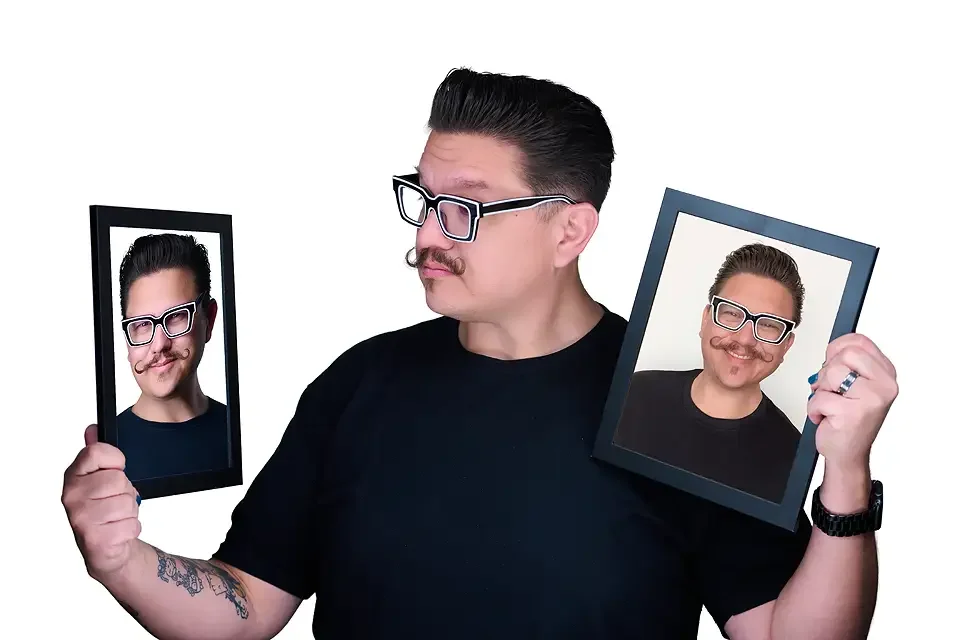
Your profile picture is the packaging for everything you bring to the table. And just like all consumers have been taught from a young age, if it doesn't look good, we either ignore it or expect it to be at a discount.
LinkedIn's own data shows profiles with professional photos receive up to 21 times more profile views and 36 times more messages than those without.
Your headshot is telling people what you're worth before you ever say a word. Make sure it's telling the right story. view session options and book your Las Vegas headshot.
Not All Photographers Are Created Equal
This part matters and most people skip it entirely.
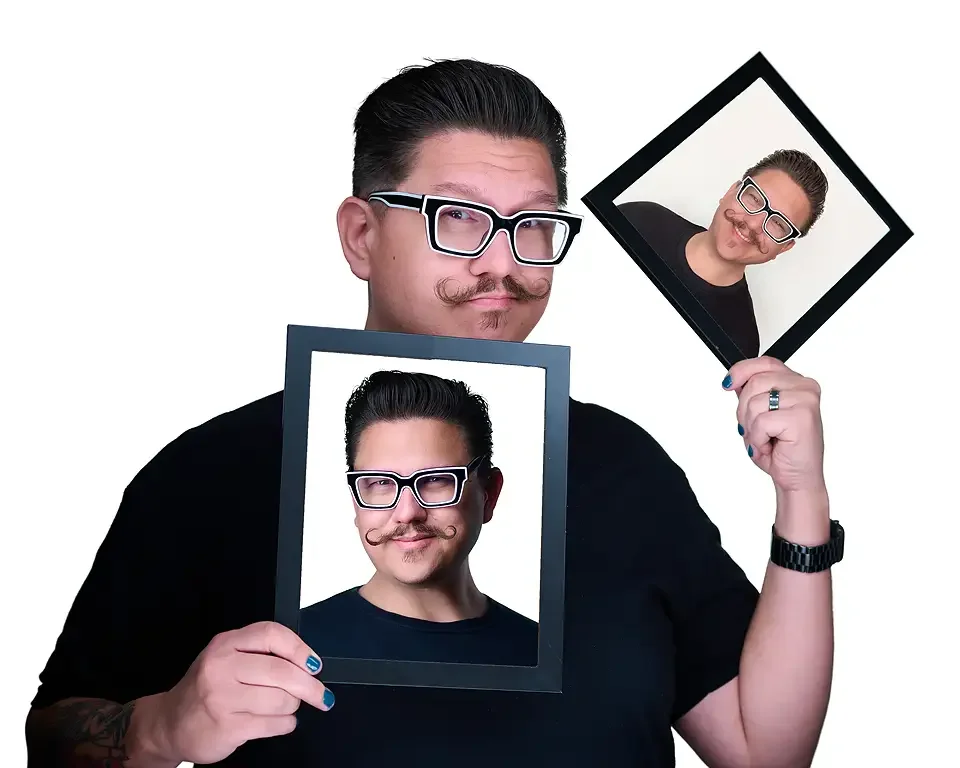
An incredible wedding photographer, family photographer, or event photographer may have zero understanding of what makes a headshot actually work. These are genuinely different disciplines. A headshot isn't just a nice photo of a person. It's a strategic image built to communicate something specific to a specific audience.
When you're researching photographers, treat it like any other significant purchase, with the same attention to detail that you'd research a car, a home, or a contractor. Here's what to actually look for:
Does the photographer specialize in headshots, or is it just an add-on service they offer alongside everything else? Specialization matters.
Look at their portfolio carefully. Is it consistent? Do the images have a coherent style, color, and feel? Or does every photo look like a different photographer took it?
Pay attention to camera height and how subjects are framed. If subjects appear lower in the frame than the viewer, they look diminished. If they're at eye level or slightly above, they project authority and confidence. This is a subtle but powerful difference.
Look at the expressions. Do the subjects look uncomfortable, hesitant, or stiff? Do they look like they're being told to smile rather than a genuine smile? (believe me you can always tell the difference)
Here's something most people don't know: bad expressions are one hundred percent the photographer's fault, not the subject's. The subject cannot see their own face. Their brain lies to them about what their expression actually looks like. It is entirely the photographer's job to coach, direct, and elicit the expression that serves that person's brand and industry.
Ask yourself honestly, would you want to work with the people in that portfolio? Would you reach out to them? If the answer is yes, that photographer knows what they're doing.
For a full breakdown of how to evaluate and choose the right photographer, read How to Choose a Headshot Photographer in Las Vegas.
So Should You Take a Selfie?
Here's the honest answer.
If you genuinely cannot afford a professional right now, a selfie is better than nothing. A blank profile or a ten-year-old photo that looks nothing like you is actively working against you. So yes, use a selfie as a temporary placeholder while you research and save for a photographer who specializes in headshots.
But treat it as exactly that, temporary. And use the tips below to make it as good as it can be.
How to Take a Better Selfie in the Meantime
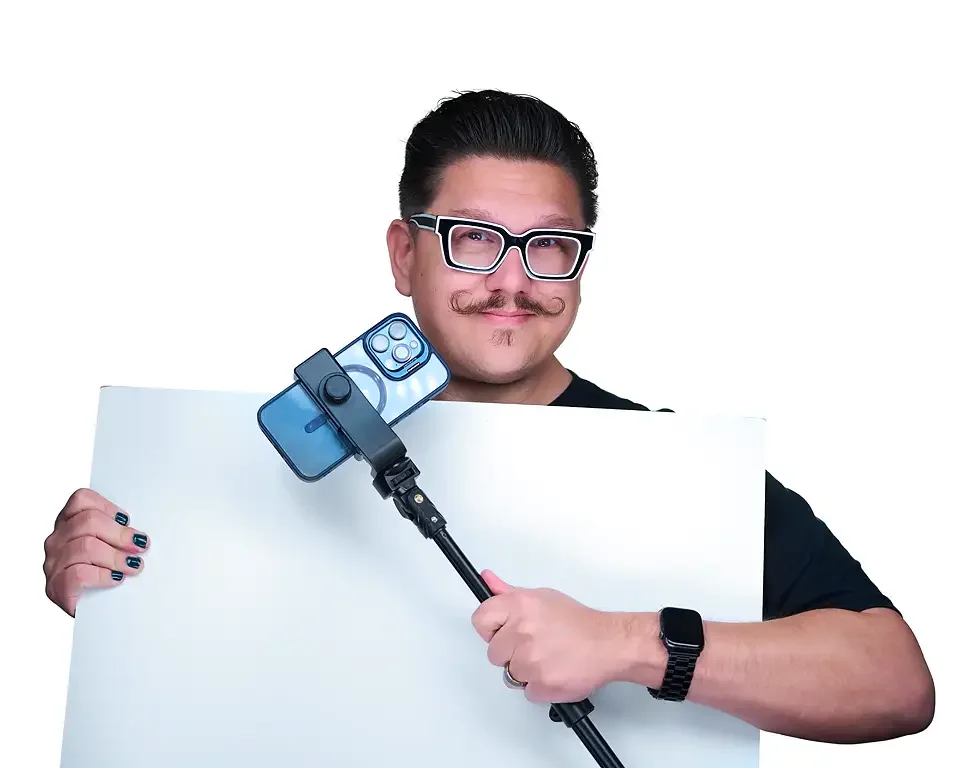
Frame it as a headshot. Headshots are mid-chest and up. A half-body or full-body shot puts too much distance between you and the viewer and loses the sense of connection. Get close.
Use window light. Natural light from a window is flattering and free. If the sunlight is harsh, hang a thin white curtain or sheet to diffuse it. Soft, even light is what you're after.
Keep your background simple. White, light grey, or dark grey all work well. You can pick up a large matte board from a craft store for a few dollars. A white board will fall off to a soft grey depending on the distance behind you, which works beautifully for most skin tones.
Make sure your clothes are ironed and fit well. If a shirt collar is too loose or gaping, roll a piece of paper towel and tuck it behind your neck to close the gap. It sounds ridiculous and it works perfectly. For a full wardrobe breakdown by industry, read What to Wear to Your Headshot Session
Use a phone tripod and set your timer. Lock the autofocus on your face. Adjust the exposure until the light looks good, you want a subtle highlight on your forehead and nose with light catching your eyes. Eyes with no light in them look flat and disconnected.
Ladies, get your hair off your shoulders. Hair sprawling across your chest and arms in a headshot looks messy and distracts from your face. Pull it back or off to one side.
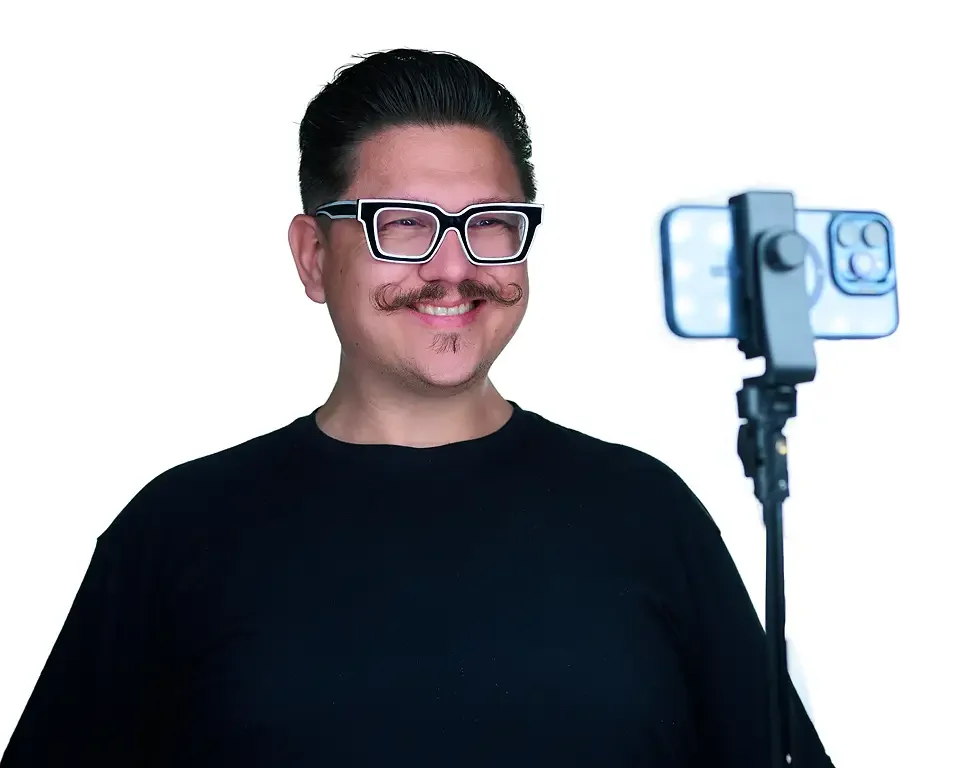
Work your expression. This is the most important part. Practice soft, subtle smiles. Better yet, make yourself genuinely laugh or giggle right before the timer fires. You want confidence mixed with approachability, not a forced grin.
Never use a filter. Not a beauty filter, not a smoothing filter, not a vintage filter. Not for any reason. Not just no but oh hell no. If you use a filter on your headshot, you might as well not post anything at all. You want people to recognize you when they meet you in person.
Frequently Asked Questions
Is a selfie ever acceptable for a professional profile?
As a temporary placeholder, yes. As a long-term strategy, no. If your headshot is the first thing a potential client or employer sees, a selfie signals that you didn't think it was worth investing in. That's a message you probably don't want to send.
How much should I expect to spend on a professional headshot?
It depends on the photographer and the scope of the session. Individual headshot sessions with me typically start around $250 and go up from there. Every Photographer has their own pricing structure based on experience, specialization, and what's included. A full personal branding session with multiple looks can run two to five thousand dollars. For most professionals, a focused individual session is the right starting point.
How do I know if a headshot photographer is actually good?
Look at their portfolio with a critical eye. Are the expressions natural or stiff? Is the lighting consistent and flattering? Do the subjects look like confident, approachable people you'd want to work with? If the answer is yes across the board, that photographer knows what they're doing.
How often should I update my headshot?
Every two to three years at minimum, or any time your appearance changes significantly, a new hairstyle, significant weight change, or major career pivot. Your headshot should look like you do today, not like you did five years ago. For the full breakdown of timing by career stage, read How Often Should I Update My Headshot
What's the single biggest mistake people make with headshots?
Using a photo where the expression is off. A technically perfect photo with a stiff, uncomfortable, or hesitant expression will underperform a slightly imperfect photo where you look genuinely warm and confident every single time. Expression is everything.
Ready to stop using that placeholder and get a headshot that actually works for you?
Here's how it works at Pandorica.
Step one: pick your session. Express, Signature, or Executive, all three include professional studio lighting, expression and posture coaching, and fully retouched final images. Step two: show up. Before a camera is touched, we talk through your goals, your industry, and who you're trying to reach. Step three: walk out with images you're excited to use. Same-day delivery is available on every individual session.
It takes about three minutes to book.
When your headshot is working, you stop thinking about it. No more hesitating before handing out a business card. No more hoping people don't click over to your LinkedIn. You show up online looking exactly like the professional you already are, and the photo does the work before you ever say a word. That is what a good headshot is supposed to do.
View Session Pricing and Book Your Session
Written by Mondo Rojas, founder of Pandorica Headshot Studio in Las Vegas. Mondo has 13 years of experience in headshot photography, trained under world-renowned photographer Peter Hurley, founder of The Headshot Crew. He holds Associate Photographer status and the title of Mentor within The Headshot Crew, and has studied the nuances of facial expressions to coach clients into their best look. Pandorica Headshot Studio has over 200 five-star Google reviews.