How to Choose a Headshot Photographer in Las Vegas
TL;DR
Choosing the right headshot photographer in Las Vegas comes down to five things: specialization, expression coaching ability, portfolio consistency, the session experience, and whether the final image will actually move your career forward. Most people skip straight to price, and that's exactly backwards. A photographer's portfolio tells you everything before you ever send a single email. Look for consistent color, correct camera height, and expressions that look genuinely alive, not survived. And ask one question before you book anyone: will this image make me money?
The right headshot photographer doesn't just take your photo. They direct your expression, shape how you're perceived before you say a word, and deliver an image built to work as a marketing tool across LinkedIn, your website, and every platform where your name shows up professionally.
Your headshot is doing a job whether you think about it that way or not. According to LinkedIn data, profiles with professional headshots receive 14 times more views than those without. A separate study of 400 participants found professional headshots score 76% higher in perceived competence than selfies. And 63% of recruiters in a 2024 survey flagged unprofessional profile photos as a reason they wouldn't reach out at all.
Not "might not." Wouldn't.
So the stakes are real. The problem isn't that people don't know headshots matter. The problem is they don't know how to tell a skilled headshot photographer from someone who just owns a nice camera and a decent lighting kit. This post walks you through exactly what to look for, what to ask, and what to walk away from.
Here is how to use this guide. Start by getting clear on what you need the image to do and who it needs to speak to. Then look at portfolios with the specific criteria below, not just the one image that caught your eye. Ask the director test question before you book anyone. Then read the reviews looking for session experience, not just outcome. Do those four things and the right photographer becomes obvious.
Table of Contents
Start With the Right Question, And It's Not "How Much?"
Why Specialization Matters More Than General Photography Experience
How to Actually Read a Portfolio
The Director Test, The Thing Nobody Asks About
What the Session Experience Tells You About the Final Image
Red Flags to Watch Before You Book
What You're Actually Paying For
FAQ
Start With the Right Question, And It's Not "How Much?"
The most common first question people ask when reaching out to a headshot photographer is about price. And honestly, that's the wrong place to start.
Here's a question worth asking yourself before you ever contact a photographer: will this image make me money? Will it further your career? Does it position you as the person to call, the expert to hire, the speaker worth booking? Does it show you as credible, approachable, and worth taking seriously?
That's the actual job of a headshot. It's not a vanity project. It's a business decision. You're putting this image on LinkedIn, your company website, your speaker bio, your press kit, your email signature. Every person who encounters your name online is going to see it. And before they read a single word about you, they've already formed an opinion based on that photo.
So start by getting clear on what you need the image to do. A defense attorney and a tech startup founder need two completely different photographs. A corporate executive and a voice actor are presenting themselves to entirely different audiences. Understanding your goal, your industry, and the audience you're trying to reach gives you the context to evaluate everything else.
Once you know what you need, then you can find someone qualified to deliver it.
Why Specialization Matters More Than General Photography Experience
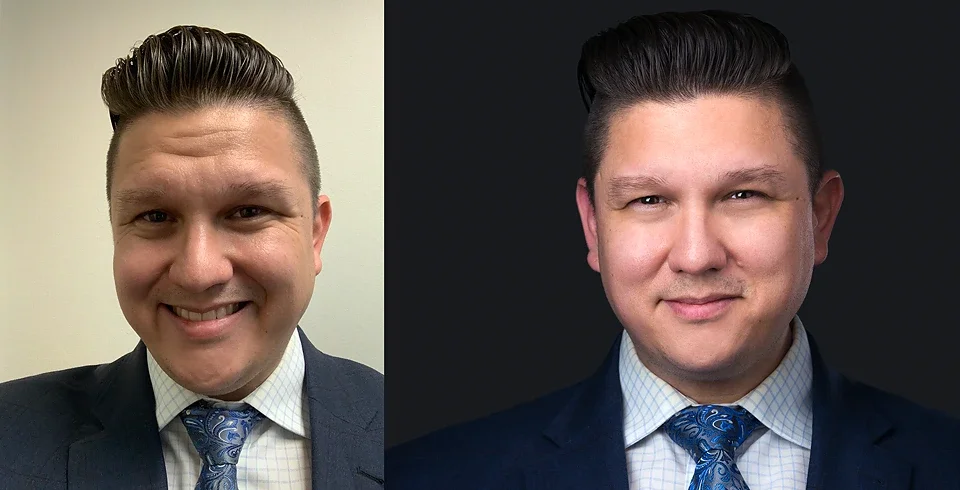
Expertise in lighting and direction makes all the difference. Same person (me), wardrobe, and backdrop.
A wedding photographer is not a headshot photographer. Neither is a real estate photographer, a portrait studio that does family photos, or a friend who's "pretty good with a camera." These are all different disciplines with different skill sets, and the gap matters a lot when it's your face and your professional reputation on the line.
Headshot photography requires a very specific set of skills. Lighting for faces is different from lighting a room or a landscape. Understanding how an image will render at thumbnail size on LinkedIn is different from knowing how a photo looks printed large on a wall. And most importantly, the ability to direct a human being into a genuine, confident, marketable expression is a craft that takes years to develop which is something also AI apps could never deliver.
This is why training matters. Photographers who have studied specifically within the headshot discipline, particularly under methodologies developed by industry leaders like Peter Hurley, founder of The Headshot Crew, bring a level of intentionality to expression coaching that generalist photographers simply don't have. The Headshot Crew has trained photographers worldwide in the specific technical and interpersonal skills that separate a great headshot from a forgettable one.
When you're evaluating a photographer, find out how much of their business is actually dedicated to headshots. Someone who does headshots as a side service alongside weddings and events hasn't built the same depth of experience as someone who has spent years shooting nothing but professional portraits. The volume of work, the repetition, and the specific focus on this one type of image makes a real difference in the result you get.
How to Actually Read a Portfolio
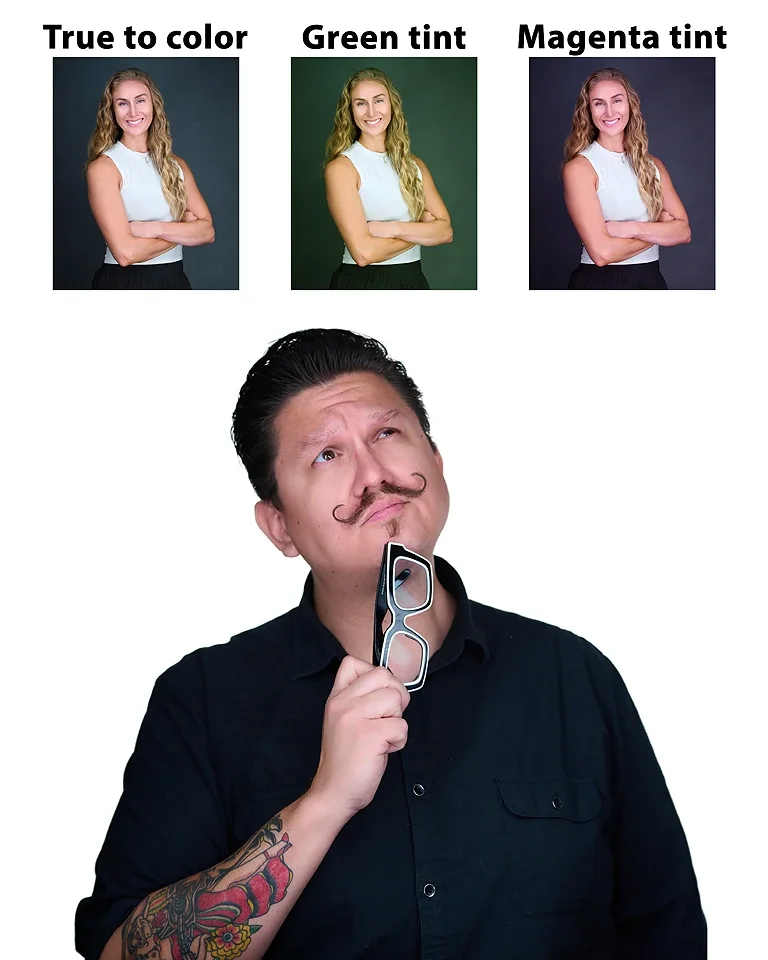
Most people look at one strong image in a photographer's portfolio and stop there. That's a mistake. One great shot is a one-off. The rest of the portfolio is what you judge.
When you're scrolling through a photographer's work, here's what you're actually evaluating:
Camera height. This one is subtle but it makes a massive difference in how a subject is perceived. The camera should feel like it's at eye level with the subject, or the subject should be slightly elevated above the viewer's line of sight. Think about how action movie posters are shot. The hero is almost never photographed from above. The camera comes up from below because that angle conveys power, authority, and strength. It's subconscious, but you feel it immediately. And make no mistake YOU are the hero of the shot and it should be shot that way. When a photographer shoots from above, it diminishes the subject. When the angle is right, it elevates them. Look for this across an entire portfolio.
Color consistency. Flip through ten images at once and ask yourself: do they all feel like they were taken by the same person with the same eye? Or does one look blue, one look green, one look warm, one look flat? Color consistency is a sign of a trained eye and a disciplined editing process. A photographer who has a defined style, whether they shoot with high contrast and saturation or clean and neutral, will have a portfolio that feels cohesive. A portfolio that looks like ten different photographers shot it tells you the person hasn't developed a consistent technical foundation.
Expression quality. This is the most important thing you can look for, and it's also the hardest to fake across an entire body of work. Do the subjects look natural? Do they look like they're genuinely comfortable and present, or do they look like they're concerned for their well being? Are the eyes alive and engaged, or unfocused and checked out to lunch? A stiff, held expression is not a client problem. It's a photographer problem. The photographer's job is to connect and get a genuine expression out of every person who is in front of their lens, regardless of how uncomfortable that person feels when they first show up.
Range. Does the portfolio show a variety of ages, face shapes, skin tones, and professional types? Do they have the same person in different outfits on multiple pages or the same page? That's a sign of limited experience, and not enough people in front of their camera. Which is fine, we all have to start somewhere, but just know that going in.
A great portfolio shows a wide range of people the photographer brought out their best in. That demonstrates real skill. A narrow portfolio might mean limited experience or a one-size-fits-all approach.
The Director Test, The Thing Nobody Asks About
Here's the question almost nobody asks before booking a headshot photographer, and it might be the most important one: How do you direct clients who aren't comfortable on camera?
The reason this matters so much is that expression cannot be fixed in post-production. Camera angle can be forgiven if it's not too far off. Color can be corrected in editing. But if the expression in the frame looks held, uncomfortable, uneasy, or withdrawn, there is nothing the photographer can do after the fact to fix it. That image is a loss.
We are empathetic creatures. When we look at a photo and the person in it looks uncomfortable, we feel that discomfort. We register it in a fraction of a second before we even consciously process what we're looking at. And in a professional context, that subconscious response translates directly into doubt about the person's confidence, authority, and approachability.
A common excuse among photographers who haven't developed this skill is to say: that's just what the client gave me. I couldn't get anything better out of them. That's not an acceptable answer and is 100% the photographers fault. It's the their job to get a great expression. Not the client's job to arrive already knowing how to perform one. The photographer's responsibility to connect with their client. I tell photographers I teach to use humor, direction, conversation, or whatever approach works for that specific person, to create the conditions where a genuine, powerful expression is possible.
Spoiler alert, you don’t know what your face looks like, your brain lies to you and thinks it knows but it really doesn’t. My job as your expression coach is to be your mirror. I can’t tell you how many times after few frames of me coaching and having my clients doing what is arguably very strange postures with their necks in order to get a better jaw line and bring my them over to the monitor and they are blown away by the result because they felt so weird and strange and like I was out of my mind and there was no way these shots would look anywhere near good. Their brain lied to them, but after seeing the result it reinforced that what they are doing is going to look good and to just trust the process.
When you're evaluating a photographer, ask them directly. What's your process for working with someone who's nervous or uncomfortable? How do you direct expression? What happens if someone freezes up in front of the camera? The quality of that answer tells you a lot about whether this person has actually developed this skill or whether they're relying on clients to do the work for them.
What the Session Experience Tells You About the Final Image
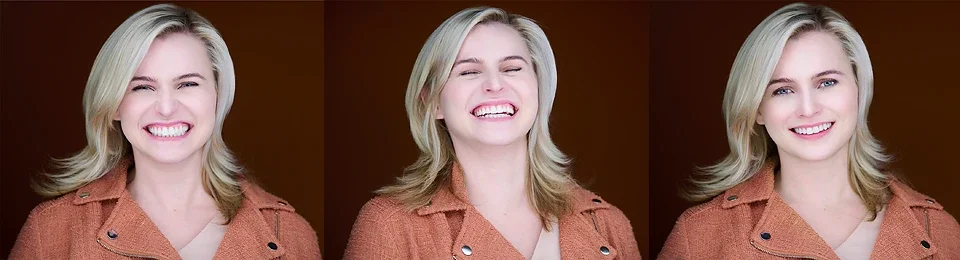
The session experience and the final image are not separate things. The way you feel during a session directly affects what ends up in the frame. A photographer who understands this designs the entire experience around getting you out of your head and into a state where genuine expression is possible.
Think about the headshot session the way a lot of people think about going to the dentist. You know you need it. You know it's going to benefit you. And you've built up a significant amount of dread in your head about what it's going to feel like, a lot of which is based on a previous experience that wasn't great. That anticipatory anxiety is real, and it shows up in photos.
A skilled photographer doesn't just acknowledge this, they actively work to defuse it from the moment you walk in. That might look like a warm greeting, an offer of water, small conversation about whether you found the place okay, anything that creates a normal human moment before the camera comes out. It sounds simple. It makes an enormous difference.
The technical work, the posing adjustments, the jawline angles, the posture corrections, these all feel strange when you're doing them. A good photographer shows you what they need, explains the why behind it, and makes the process feel collaborative rather than clinical. The moment a client sees what those adjustments look like on camera, the conversation shifts from "this feels weird" to "okay, I get it now." That shift is where the good work begins.
When you're researching photographers, read the reviews with this in mind. Look for specific language about how clients felt during the session, not just whether they liked the final images. Reviews that mention feeling relaxed, feeling directed, feeling like the photographer actually saw them, these are the signals that tell you the experience was designed rather than accidental.
Red Flags to Watch Before You Book
Most of these will show up before you ever step into a studio.
No pre-session consultation or conversation. A photographer who will let you book, pay, and show up without any discussion beforehand is not thinking about your specific needs. The best sessions start with understanding your goals, your industry, your audience, and what you want the image to do.
Vague answers about their direction process. If you ask how they work with clients on camera and the answer is generic or they pivot immediately to talking about their equipment, that's a signal. The technical side of photography is table stakes. The ability to direct people is what separates good headshot photographers from everyone else.
A portfolio that shows one type of client. If every person in the portfolio looks the same age, same background, same general vibe, it’s a sign the photographer hasn't shot many different people or that many headshots and that’s ok, again we all gotta start somewhere but just know that going in.
Volume over quality. It’s all about ROI, if a photographer is leading with how many images you'll receive at a low price, that's worth examining. A session that delivers 30 images is not automatically better than one that delivers five. What matters is whether the images that come out of the session are actually going to work for you. A handful of strong, well-directed images that position you correctly will serve you better than a large gallery of mediocre ones.
Price is the first thing they lead with. This goes both ways. A photographer who immediately discounts or competes on price before you've even seen their work is telling you something about how they value it. Look at the work first. Determine fit first. Then talk about what it costs.
What You're Actually Paying For
When you invest in a professional headshot, you're not paying for an hour of someone's time. You're paying for years of training, thousands of sessions worth of experience, a developed eye for lighting and expression, the ability to coach you through a process that most people find uncomfortable, and the technical skill to deliver an image that actually works across every platform you'll use it on.
PhotoFeeler's analysis of over 60,000 headshot ratings found that a genuine smile showing teeth is the single biggest likability booster in professional photos, with a measurable impact on perceived competence and influence as well. Getting that expression, the one that reads as genuine rather than performed, is not something that happens automatically. It takes direction. It takes a photographer who knows how to create the conditions for it.
The difference between a headshot that opens doors and one that gets scrolled past isn't usually dramatic. It's a slightly off camera angle. It's a color cast that makes the image feel slightly wrong without the viewer being able to articulate why. It's an expression that looks held rather than natural. These are technical problems with real professional consequences, and they are the direct result of working with someone who hasn't developed the specific skills that headshot photography demands.
One image that positions you correctly, that shows you as credible, approachable, and worth taking seriously, is worth more than 30 images that don't. The headshot that makes the right person say "I want to work with that person" before they've read a single word about you is the one that pays for itself.
Ready to book a session at Pandorica?
FAQ
Q: What should I ask a headshot photographer before booking?
A: Ask to see a full portfolio, not just highlight images. Ask how they direct clients who are uncomfortable on camera. Ask what's included in the session and what the delivery process looks like. Ask whether they specialize in headshots or do other types of photography as well, will they give you wardrobe guidance? And before any of that, ask yourself what you need this image to accomplish, because that question will shape every conversation that follows.
Q: How do I know if a headshot photographer's portfolio is actually good?
A: Look across the entire body of work, not just individual images. You're evaluating three things: consistency of color across images, correct camera height that gives subjects authority rather than diminishing them, and expressions that look natural and alive rather than stiff or held. One strong image out of a portfolio is a one-off. Consistent quality across many different clients is the real signal.
Q: How much should I spend on a professional headshot?
A: The more useful question is: what is this image worth to you professionally? A headshot used on LinkedIn, your company website, a speaker bio, and a press kit is working every day to shape how people perceive you before you speak a word. The return on a great headshot, in the form of opportunities, credibility, and professional positioning, typically far exceeds what it costs. Focus on finding someone whose work you genuinely respond to and whose process you trust, then work within your budget from there.
Q: How often should I update my professional headshot?
A: A good rule of thumb is every two to three years, or any time your appearance changes significantly. Your headshot should look like you on a great day, not you five years ago. When you show up to a meeting, a speaking event, or a video call and you look noticeably different from your headshot, it creates a moment of disconnect that undermines the professional impression you've built. Read a full break down of this very question
Q: Does it matter if the photographer specializes in headshots versus general photography?
A: Yes, significantly. Headshots require a specific combination of technical skills and interpersonal ability that generalist photographers haven't necessarily developed. Lighting for faces, understanding how images compress on LinkedIn and other platforms, and most importantly the ability to direct expression, these are skills built through repetition and specific training. A photographer who dedicates a substantial portion of their business to headshots has developed these skills in a way that someone who does them occasionally has not.
Q: What's the difference between a headshot session and a portrait session?
A: A portrait session captures you as a subject, often in a broader context with creative or personal framing. A headshot session is specifically designed to produce a professional marketing image. The framing is tighter, the focus is on your face and expression, and every decision, lighting, background, angle, posture, is made in service of how you'll be perceived professionally. A headshot photographer thinks about where this image will live and what job it needs to do.
Q: Should I use the same headshot on LinkedIn, my website, and other platforms?
A: For most professionals, consistency across platforms is the stronger move. When someone looks you up across multiple channels, seeing the same professional image reinforces your brand and creates a cohesive impression. That said, some professionals have different audiences on different platforms and may choose to use variations from the same session. What you want to avoid is a mismatch where your LinkedIn photo looks completely different from your website photo, which looks different from your speaker bio. Consistency signals intentionality.
Q: What if I've had a bad headshot experience before?
A: You're not alone, and the experience you had is more common than it should be. A bad session usually comes down to one of two things: a photographer who didn't have the skills to direct you, or a session that felt transactional rather than collaborative. The right photographer will acknowledge that being photographed is genuinely awkward, create an environment where you can relax, show you what they need from you technically, and stay engaged throughout. If you've been burned before, ask more specific questions about process before booking, and trust your gut during the initial conversation.
The Bottom Line
Choosing the right headshot photographer is a business decision. It starts with knowing what you need the image to accomplish, continues with evaluating portfolios honestly and specifically, and comes down to finding someone who can direct a genuine expression out of a real human being under studio lights. That last part is the skill that separates a great headshot from one that just takes up space on your LinkedIn profile.
When you get it right, the image does something you can feel. You stop hesitating before sharing your LinkedIn profile. You send the link to your speaker bio without an apology attached. You walk into a room and the person across the table already knows who you are because they looked you up and the version they found online matched the person who just walked in. That is what a great headshot actually does. Not just look good on a page. Make the introduction before you open your mouth.
If you're ready to work with a photographer who takes all of this seriously, Pandorica Headshot Studio serves professionals across every industry in Las Vegas and beyond. Sessions start at $250.
Written by Mondo Rojas, founder of Pandorica Headshot Studio in Las Vegas. Mondo has 13 years of experience in headshot photography, trained under world-renowned photographer Peter Hurley, founder of The Headshot Crew. He holds Associate Photographer status and the title of Mentor within The Headshot Crew, and has studied the nuances of facial expressions to coach clients into their best look. Pandorica Headshot Studio has over 200 five-star Google reviews.